


Online shopping has always been about getting found. And for years, “getting found” meant showing up in Google search results, optimizing product pages for keywords, running ads, and building a solid review profile on Amazon or similar platforms. That playbook still matters. But there’s a new layer of discovery that’s changing the game for e-commerce brands — and most of them haven’t caught up to it yet.
That layer is AI-powered answers.
The Changing Shape of Product Discovery
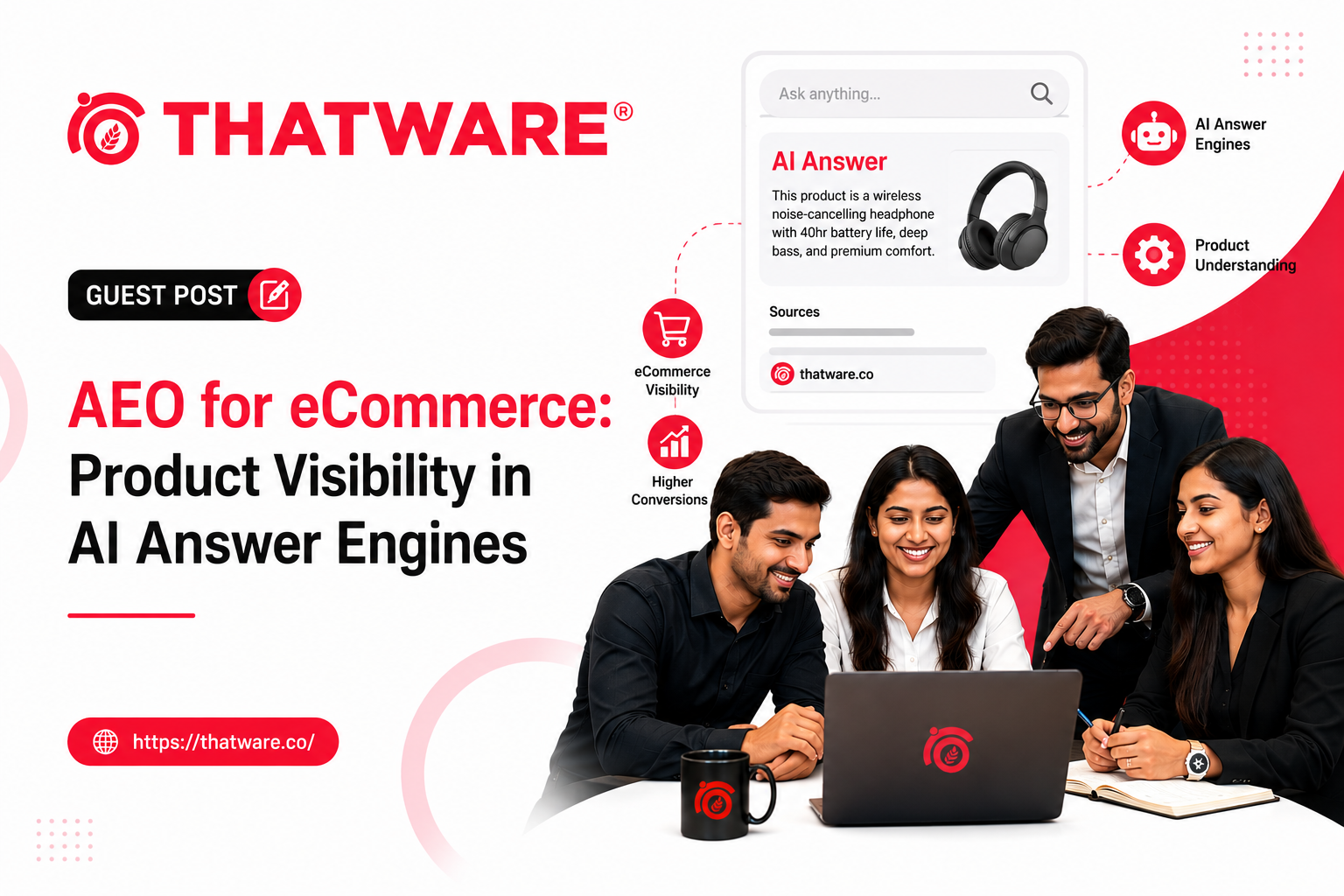
Here’s a scenario that’s playing out millions of times a day: a shopper pulls out their phone, opens ChatGPT or Perplexity, and types something like “what’s the best protein powder for women who do strength training?” or “which air purifier works best for a 500 square foot apartment with pets?”
They’re not clicking through to a SERP. They’re not browsing category pages. They’re asking a question and expecting a direct, trustworthy answer. And the AI system responds with specific product recommendations, based on the information it has access to about those products, those brands, and those use cases.
If your product shows up in that answer, you’ve entered the consideration set before the shopper has even visited your website. If you don’t show up — you don’t exist in that discovery moment.
What Makes AI Different From Traditional Search for eCommerce
Traditional e-commerce SEO is largely about: product page keyword optimization, category page structure, technical health, backlink authority, and review signals. These remain important. But they don’t fully address how AI answer systems form product recommendations.
AI systems are more holistic in their evaluation. They’re drawing on training data and retrieval that includes reviews, editorial coverage, ingredient or spec data, brand reputation signals, comparative discussions in forums and publications, and much more. A product that ranks well in Google because it has an optimized title tag and a strong review count may or may not appear in AI answers — because the AI is asking a different question: “do I have enough coherent, credible information about this product to confidently recommend it?”
That’s the gap that AEO fills for e-commerce brands.
The AEO Opportunity in eCommerce
There are a few specific places where eCommerce AEO services create real impact:
Use-case specificity. AI systems are good at matching products to specific needs. If your content ecosystem clearly explains which of your products is best for which specific use cases, customers, or problems — with the kind of depth that an AI can extract and cite — you become the default recommendation for those queries. Generic “best protein powder” coverage won’t win this game. “Best protein powder for women doing strength training who want to avoid dairy” might.
Comparative presence. AI answers frequently include comparisons — “Product A is better for X, Product B is better for Y.” If you’re not represented in credible comparative content across the web, you’ll be absent from these syntheses. Building earned editorial coverage that includes your products in honest comparisons is a key AEO lever for e-commerce.
Product entity recognition. This is the structural layer. Your products need to exist as well-defined entities — with consistent naming, accurate specifications, and clear attribute data — across the information sources that AI systems draw from. Schema markup on product pages is part of this. So is consistent product data across third-party databases, review platforms, and editorial sources.
Practical Steps for eCommerce Brands
If you’re managing an e-commerce brand and want to improve AI visibility, here’s a logical starting sequence:
First, audit your current AI presence. Search for queries your shoppers would ask and see where you show up — or don’t. This establishes your baseline and identifies your biggest gaps.
Second, map your product use cases exhaustively. For each product, identify the specific questions, needs, and buyer profiles it’s best suited for. Then create content that answers those specific questions directly — not as marketing copy, but as genuinely useful guidance.
Third, ensure product data consistency. Verify that your product names, specifications, and key attributes are consistent across your website, Amazon listings, Google Merchant Center, review platforms, and third-party publications. Inconsistency is confusing to both humans and AI systems.
Fourth, build editorial coverage. Work to earn honest mentions in publications and platforms where your target shoppers already look for guidance — and where AI systems will encounter credible third-party information about your products.
Where AEO optimization services Add Leverage
Most e-commerce marketing teams are stretched thin. They’re managing ads, handling customer service, maintaining listings, and trying to keep up with promotions. Building a systematic AEO program on top of that is genuinely difficult without specialist support.
This is where working with an agency that has AEO optimization services expertise pays off — not just for strategy, but for execution capacity. The entity-building work, the comparative content development, the structured data implementation, the off-site citation campaigns — these require sustained, skilled effort that’s hard to fit into a retail marketing team’s existing workload.
The brands that will own AI search visibility in e-commerce over the next few years are the ones investing now, while the space is still relatively uncrowded. The opportunity window won’t stay this wide indefinitely.
Your products have a story to tell. The question is whether AI systems know it well enough to tell it on your behalf.