


Customers expect a familiar experience whenever they visit a business they already know. Whether they enter a restaurant, hotel, retail store, gym or café, they should immediately recognize the brand’s personality. This consistency helps build trust, improve customer loyalty and strengthen brand recognition.
Many businesses focus mainly on visual elements such as logos, colors, staff uniforms and interior design. However, sound also affects how customers feel. Background music can shape the mood of a space and help every branch communicate the same brand identity. For multi-location businesses, a planned music strategy is therefore an important part of maintaining consistency.
Why Brand Consistency Matters
A business with several locations must ensure that customers receive a similar experience at each branch. If one location feels calm and professional while another feels loud and unorganized, customers may become unsure about what the brand represents.
Consistency can help businesses:
-
Build stronger brand recognition
-
Create reliable customer experiences
-
Maintain quality across every branch
-
Strengthen customer trust and loyalty
-
Support seasonal campaigns and promotions
-
Make new locations feel connected to the wider business
Music supports these goals by creating a familiar mood. Customers may not remember every song, but they often notice whether the atmosphere feels appropriate for the brand.
Music Should Match the Brand Personality
Every brand has its own style. A luxury hotel may want a calm and sophisticated atmosphere, while a gym chain may prefer energetic music that supports motivation. A family restaurant may choose cheerful tracks, while a modern retail store may use contemporary music.
When planning music, businesses should consider:
-
Their target audience
-
Customer age groups and preferences
-
The purpose of each location
-
The desired emotional atmosphere
-
The brand’s visual identity
-
The average time customers spend in the venue
Music should not be selected only because it is popular. It should support the message and personality the brand wants customers to remember.
Centralized Music Management Improves Control
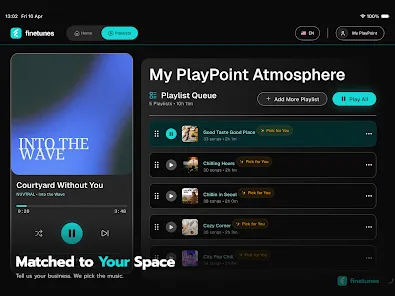
When each branch selects its own music, the atmosphere can quickly become inconsistent. Employees may use personal accounts, repeat the same tracks or choose songs that do not match the company’s image. A Multi Location Business Music Solution can help companies manage music across several branches from one central system. Managers can control approved playlists, schedules and playback settings without relying on individual employees.
Centralized management can help businesses:
-
Provide approved playlists to all locations
-
Prevent unsuitable music from being played
-
Update playlists across multiple branches
-
Monitor music activity
-
Reduce staff involvement
-
Maintain a consistent customer experience
This approach is especially valuable for franchises and growing businesses, where maintaining standards becomes more difficult as additional locations open.
Local Flexibility Is Still Important
Consistency does not mean that every branch must play the same songs at the same time. Different locations may serve different customer groups or operate in different environments.
For example, a branch in a busy city center may need more energetic music than a location in a quiet residential area. Businesses can create a central music framework while allowing managers to choose from approved playlists that suit local conditions. This balance allows the brand to remain recognizable while still responding to regional preferences, customer behavior and local events.
Music Should Change Throughout the Day
The atmosphere customers expect can change between morning, afternoon and evening. A single playlist may not work throughout the entire day.
Businesses may schedule:
-
Calm music during early opening hours
-
Bright tracks during busy daytime periods
-
More energetic songs during peak hours
-
Relaxed music during quieter periods
-
Seasonal playlists during festivals or promotions
-
Slower music near closing time
Automated scheduling reduces the need for employees to adjust music manually. It also ensures that every branch follows the same planned structure.
Use Music Designed for Commercial Spaces
Personal music-streaming accounts are usually intended for private listening and may not include the rights needed for public commercial use. Businesses should consider a professional Music Streaming for Business service created for commercial venues.
Before choosing a provider, businesses should review:
-
The countries covered by the license
-
Whether public-performance rights are included
-
The number of locations supported
-
Playlist scheduling and management features
-
User permissions for branch staff
-
Monitoring and reporting tools
-
The available music catalog
-
Restrictions involving videos or advertising
Music licensing rules can vary by country, so businesses should always review the provider’s terms carefully.
Final Thoughts
Maintaining a consistent brand atmosphere across multiple locations requires more than matching logos, furniture and staff uniforms. Music also influences how customers feel and how clearly they remember the business.
By using approved playlists, automated scheduling, central management and suitable commercial music services, companies can create a recognizable experience across every branch. A well-planned music strategy allows each location to respond to its local audience while remaining connected to the wider brand.
